
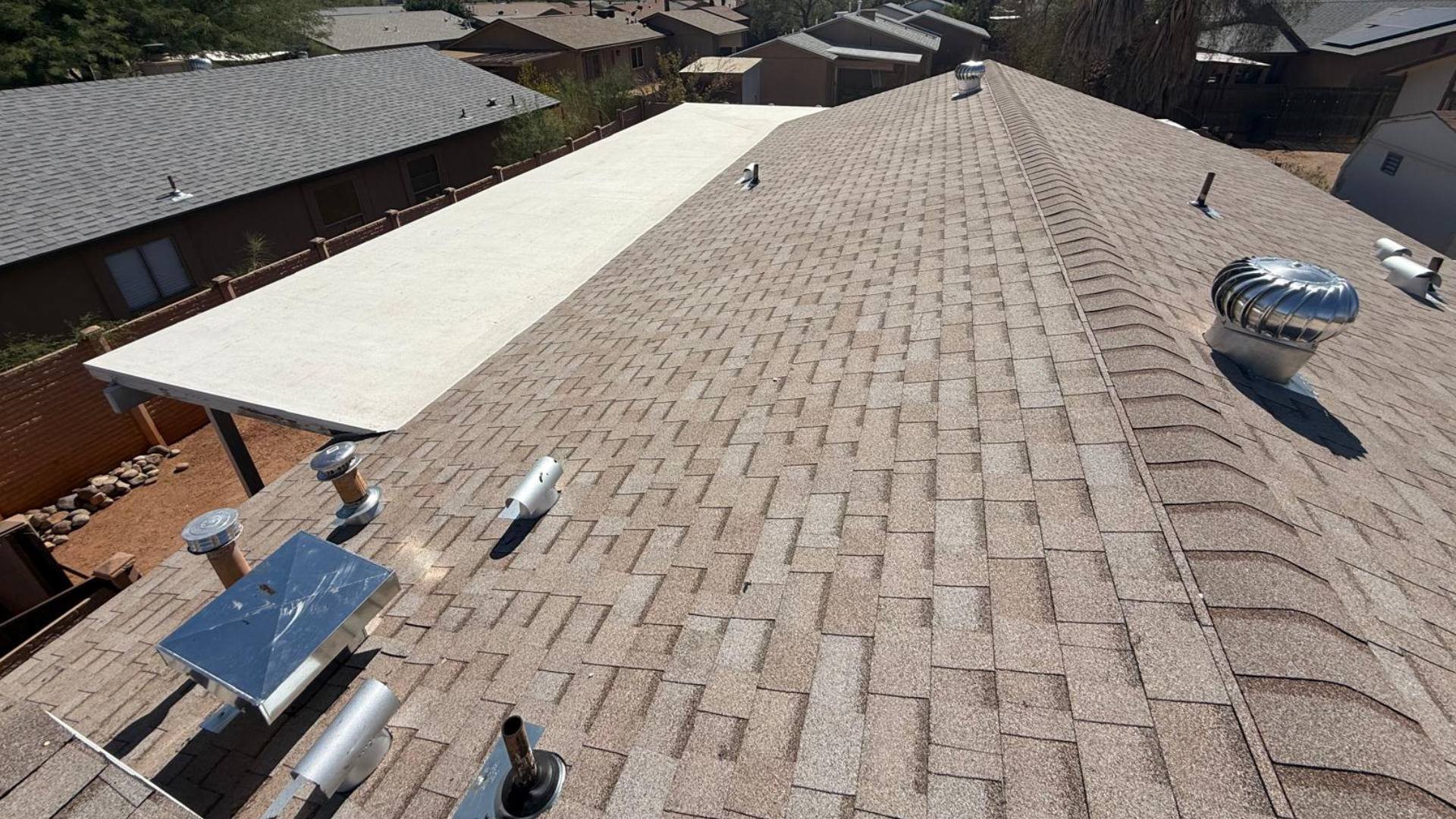
Drive through almost any pitched-roof neighborhood and you will see asphalt shingles on a large share of the homes. Asphalt shingles in Tucson are popular for good reasons: they cost less up front than most alternatives, they install quickly and they come in a wide range of colors and styles. But the Sonoran Desert is hard on them. Intense sun, extreme summer heat and monsoon wind all shorten the life of a shingle roof compared with milder climates. This guide covers the real pros and cons of shingles here, how long they last, how they compare on cost with tile and coated flat roofs, and how to pick shingles that hold up better in the heat.
Why Asphalt Shingles Are So Common in Tucson
Shingles became the default on many Tucson homes built on sloped roofs, from ranch houses to newer subdivisions. A few practical reasons keep them popular:
- Lower upfront cost. Shingles are usually one of the least expensive roofing materials to buy and install, which matters when you are replacing a whole roof.
- Fast installation. Shingles are light and easy to work with, so most residential installs move quickly and labor costs stay reasonable.
- Wide availability. Materials are easy to source locally, which helps with both new roofs and small repairs.
- Design flexibility. Shingles come in many colors and textures, which helps homeowners match their exterior or meet HOA guidelines.
- Easy spot repairs. A damaged shingle can usually be replaced individually without disturbing the rest of the roof.
3-Tab, Architectural and Designer Shingles
Not all shingles are the same. 3-tab shingles are thin, flat and the most budget-friendly. Architectural (dimensional) shingles are thicker and layered, which gives them more texture, better wind resistance and typically a longer life. Designer shingles are heavier premium products made to mimic materials like wood shake or slate. For most Tucson homes, architectural shingles are the practical middle ground: they handle monsoon wind far better than 3-tab and cost much less than premium options.
If you are still deciding between materials, our comparison of asphalt shingle and tile roofs for Tucson homes walks through the trade-offs side by side.
How Heat and UV Affect Shingles
The biggest downside of shingles in Southern Arizona is the climate itself. Asphalt is a petroleum product, and long exposure to heat and ultraviolet light slowly dries it out.
- Granule loss. The mineral granules on top of each shingle shield the asphalt from UV. As shingles age and expand and contract in the heat, granules loosen and wash into gutters and downspouts, leaving the asphalt exposed.
- Drying, cracking and curling. Once the asphalt is exposed, it becomes brittle. Shingle edges curl or cup, and cracks form, especially on south- and west-facing slopes that take the most afternoon sun.
- Thermal cycling. Hot days followed by cooler nights make the roof expand and contract over and over, which stresses the shingles, the sealant strips and the nails holding them down.
- Monsoon wind. Shingles that have lost their seal or become brittle are much easier for monsoon gusts to lift or tear off. Every missing shingle is an opening for heavy summer rain.
- Hail. Hail is not frequent in Tucson, but when it falls it knocks granules loose and can bruise or crack shingles, which speeds up aging.
Good attic ventilation matters a lot here. A hot, poorly ventilated attic bakes shingles from below as well as above, so a proper intake and exhaust setup is part of any quality shingle installation.
Lifespan and Warranty
Asphalt shingles typically last 20 to 30 years, but in Tucson’s heat and sun many roofs land toward the shorter end of that range, and 3-tab shingles usually wear out sooner than architectural ones. How long your roof actually lasts depends on the shingle quality, the color, the attic ventilation, the roof’s orientation and how well it was installed.
When you compare shingle warranties, look past the headline number:
- Manufacturer warranty covers defects in the shingles themselves. Many are prorated, which means coverage drops as the roof ages.
- Wind rating tells you the wind speed the shingles are designed to handle, which is worth checking given monsoon gusts.
- Workmanship warranty comes from the roofing contractor and covers installation errors. Ask exactly what it includes and for how long.
Most manufacturer warranties require installation to their specifications, including ventilation, so choosing an experienced installer protects your coverage as well as your roof.
Signs Your Shingle Roof Is Wearing Out
Watch for granules collecting at downspouts, bald or dark patches, curled or cracked shingles, shingles missing after a storm and water stains on ceilings. A few damaged shingles can often be handled with a shingle roof repair. Widespread curling, granule loss or repeated leaks usually mean it is time to plan a shingle roof replacement.
Cost vs Tile and Coated Flat Roofs
Roofing prices depend on the size and pitch of the roof, how many layers have to be removed, the condition of the deck, the product line you choose and details like vents, skylights and flashing. Because every roof is different, the only reliable number is an estimate based on an inspection. In general terms, here is how the main Tucson options compare:
- Asphalt shingles usually have the lowest upfront cost for a pitched roof, but they need replacing sooner than tile, so the cost per year of service is higher than the sticker price suggests.
- Tile roofs cost more up front and are heavier, but the tiles themselves last for decades. The underlayment beneath the tile is what eventually wears out and has to be replaced.
- Coated flat roofs apply to a different type of roof: the flat and low-slope roofs common on territorial-style homes and commercial buildings. A reflective coating can be renewed over time instead of tearing the roof off, and the Lifetime Layover System installs a new system over the existing flat roof without a tear-off.
For a broader look at which materials stand up best to desert conditions, see our guide to durable roofing materials for Tucson homes.
Choosing Cool-Rated Shingles
If shingles are the right fit for your home and budget, you can still improve how they handle the heat. Cool roof shingles use reflective granules that bounce more sunlight away than standard shingles, which keeps the roof surface and attic cooler.
- Pick lighter colors where your HOA allows. Light grays, tans and whites absorb less heat than dark browns and blacks.
- Look for cool-rated or reflective products and ask to see the product’s reflectivity rating when comparing options.
- Choose architectural over 3-tab for better wind resistance and a longer service life.
- Get the ventilation right so heat does not build up under the deck.
- Ask about recycling. Old asphalt shingles can be recycled into road paving materials where local facilities accept them, which keeps tear-off waste out of the landfill.
A cooler roof can reduce the load on your air conditioner during Tucson summers and may help the shingles last longer.
Get a Shingle Roof Estimate
Asphalt shingles remain a smart, affordable choice for many Tucson homes, as long as they are the right product, installed correctly and maintained. GreenGo Roofing installs and repairs shingle roofs across Tucson and Southern Arizona and will give you a straight answer on whether repair or replacement makes more sense. Request your free shingle roof estimate or call (520) 475-4000.
