
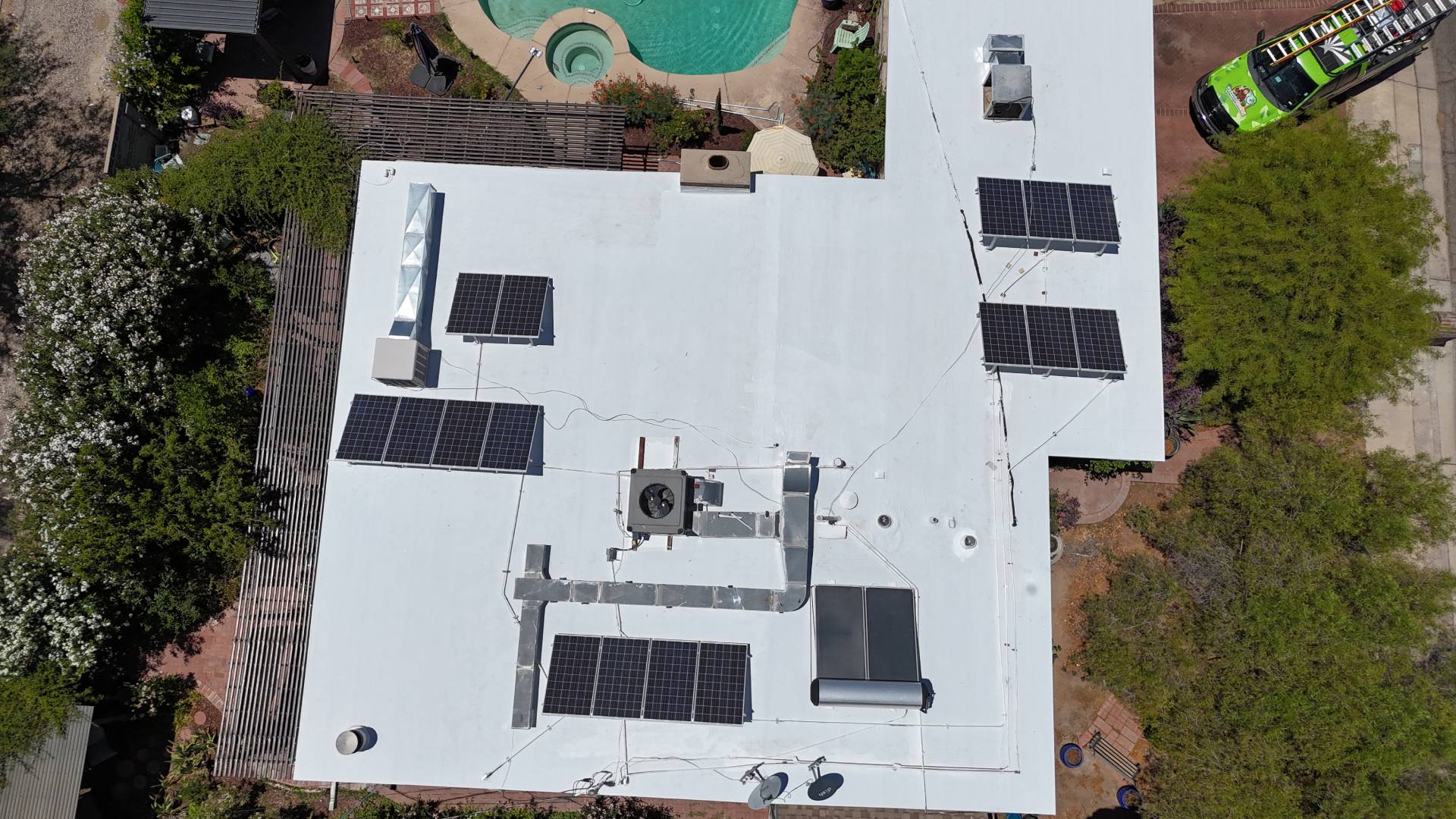
Eco-friendly roofing in Tucson comes down to two things: a roof that keeps the desert sun out of your home so your air conditioner works less, and a roofing project that keeps old materials out of the landfill. The best options do both. Below, GreenGo Roofing explains what a green roof really means in Southern Arizona, what energy savings are realistic, and how a roof layover avoids most of the waste of a full tear-off.
What ‘Eco-Friendly Roofing’ Means in the Desert
The term green roofing gets used two ways. In cooler, wetter cities it often means a vegetated roof: soil and plants growing on top of a building. Those systems need irrigation, structural reinforcement and steady maintenance, which makes them a poor fit for most Tucson homes. Here, eco-friendly roofing usually means something more practical:
- Reflective (cool) surfaces that bounce sunlight away instead of absorbing it as heat.
- Longer-lasting roofs that need replacing less often, so fewer materials are manufactured, hauled and thrown away.
- Less tear-off waste, by renewing a sound roof in place rather than stripping it to the deck.
- Smart pairing with insulation, ventilation and solar, so the whole house uses less energy.
Our eco-friendly roofing services are built around that desert definition. For a deeper look at reflective surfaces on their own, see our guide to the benefits of cool roofs for Tucson homes.
Energy Savings: How Much Can You Expect?
Tucson’s long cooling season is where an eco-friendly roof earns its keep. A dark roof under summer sun gets far hotter than the air around it, and that heat moves down into the attic, through the ceiling and into your living space. The U.S. Department of Energy notes that a cool roof can stay more than 50 degrees Fahrenheit cooler than a conventional roof in full sun. A cooler roof means a cooler attic and less work for your HVAC system.
How much that lowers your bill depends on your home:
- Roof type and color. Flat and low-slope roofs with dark built-up (hot tar) or granulated cap sheet surfaces usually see the biggest change when they receive a white, reflective system.
- Insulation. Old insulation that has compressed or degraded lets heat through and creates hot spots in the rooms below. A reflective roof plus healthy insulation outperforms either one alone.
- Ventilation. Balanced intake (soffit) and exhaust (ridge or roof) vents carry trapped heat out of the attic before it reaches the ceiling, and keep insulation from becoming heat-saturated.
- Ductwork location. Ducts running through a hot attic or just under a flat roof pick up heat quickly, so a cooler roof deck helps them too.
- How you cool. Thermostat settings, the age of your AC and how many hours the home is occupied all shift the results.
Because every house is different, we do not promise a specific percentage. What we can do is look at your roof, attic and insulation and tell you where the biggest gains are. Homeowners commonly notice cooler back rooms and shorter AC run times on the hottest afternoons.
A cooler roof also lasts longer. Daily heating and cooling makes roofing materials expand and contract; reflective surfaces reduce that thermal cycling and slow UV breakdown, which means fewer repairs over the life of the roof.

Less Waste: Layovers vs Full Tear-Offs
The greenest roof is often the one you do not throw away. A full tear-off strips every layer down to the deck, and all of that material goes into dumpsters and on to the landfill. A roof layover keeps the existing, structurally sound roof in place and installs a new waterproof system over it.
For flat and low-slope roofs, our Lifetime Layover System is a polyester-embedded coating system installed directly over the existing roof, with no tear-off. It turns a dark, aging surface into a bright, reflective, seamless membrane, so the same project that cuts waste also cuts heat gain.
A waste-avoided example: picture a typical 1,800 square foot flat roof on a Tucson territorial-style home with a built-up or cap sheet surface. Tearing that roof off can easily produce several tons of old asphalt, felt, gravel and fasteners, often more than one roll-off dumpster, plus the fuel to haul it away and the new materials to replace it. With a layover, nearly all of that stays on the roof and keeps working as a base layer. What leaves the job site is mostly loose debris removed during prep and product packaging. Actual tonnage depends on how many layers are on the roof, but the difference is large.
A layover is not right for every roof. If the deck is rotted, the roof holds widespread trapped moisture, or there are already too many layers, replacement may be the better call. An inspection tells you which side of that line your roof is on.
Eco-Friendly Materials and Coatings
Different roofs call for different sustainable choices:
- Reflective roof coatings for built-up hot tar, multi-ply granulated cap sheet and other aging flat roofs. They add a protective, sun-reflecting layer that guards against UV and thermal expansion and extends the life of the roof underneath. Coatings can be renewed over time instead of removing the roof.
- Tile (clay or concrete) on pitched roofs. Tile lasts for decades, and the air gap created by battens slows heat transfer into the attic. Lighter colors reflect even more sunlight.
- Reflective shingles. Cool-rated asphalt shingles now come in a much broader range of colors, so you do not have to choose between curb appeal and a cooler attic.
- Metal with reflective finishes, which is long-lived and widely recyclable at the end of its service life.
Reflective roofs help the neighborhood as well as the household. Dark roofs and pavement soak up heat all day and release it at night, part of the urban heat island effect that keeps Tucson evenings warm. Every roof that reflects more sunlight takes a little of that heat out of the community. Businesses with large flat roofs have an outsized opportunity here; see our article on green roof solutions for Tucson businesses.

Whatever material you choose, upkeep matters. Dust, debris and storm damage from monsoon season can dull a reflective surface or open small leaks, so a quick inspection after the June 15 to September 15 storm season keeps the roof performing as designed.
Pairing Your Roof With Solar
Solar panels and an eco-friendly roof work best as a team. Panels usually stay on the roof for decades, so the roof under them should be in good shape before installation. Removing and reinstalling panels later to fix a failing roof adds cost and creates more waste. A reflective coating or layover completed before the array goes up gives it a sound, long-lasting base, and a cooler roof surface can help panels run closer to their rated output, since solar cells lose efficiency as they heat up.
If you already have panels, a coating can often still be applied around the mounts, with careful detailing at every penetration. Learn more in why roof coating matters for solar-powered roofs.
Ready to cut cooling costs and skip the dumpster? Request a free eco roofing estimate from GreenGo Roofing or call (520) 475-4000. We will check your roof, attic and insulation and recommend the option that saves the most energy and waste for your home.
