
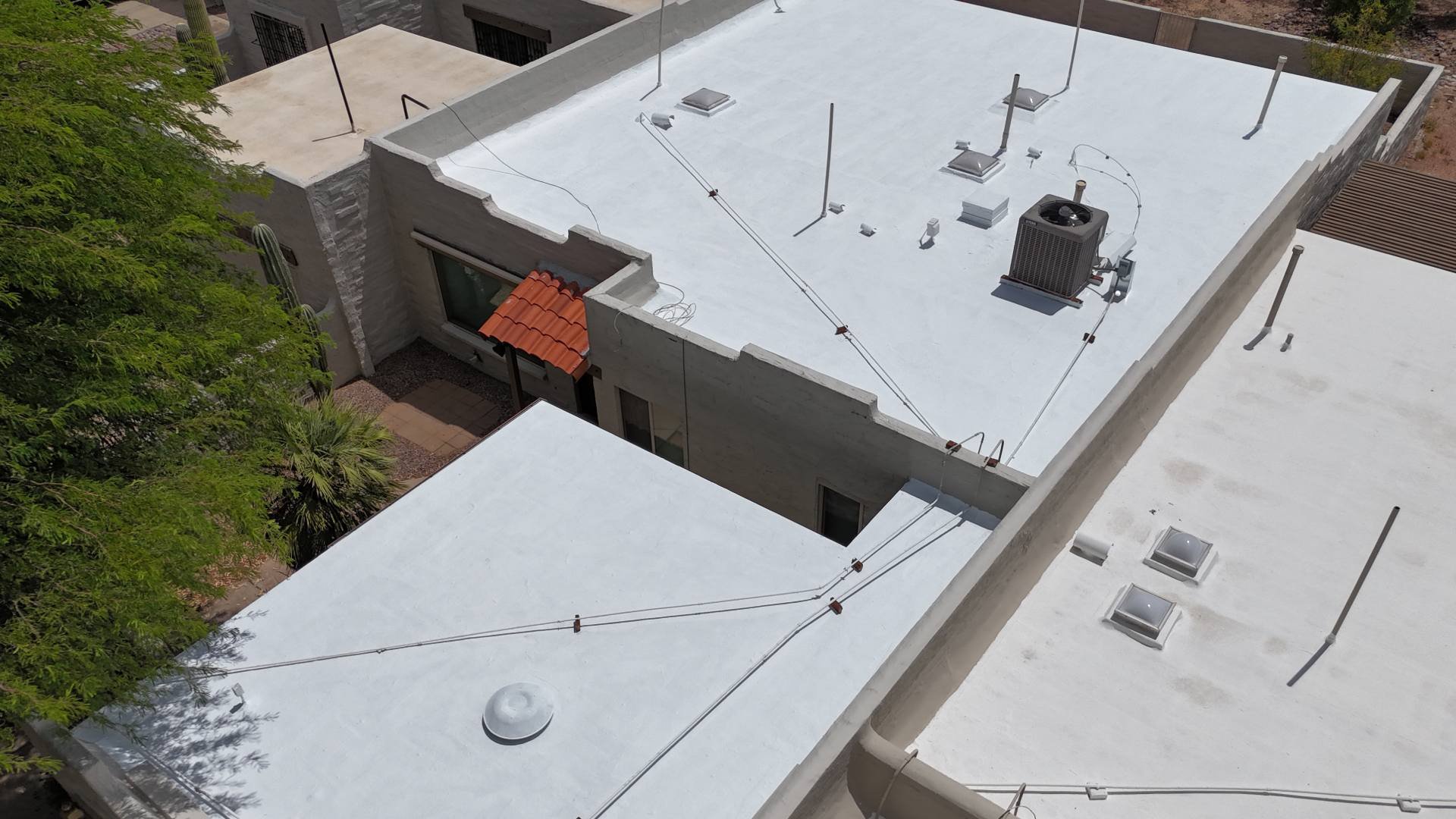
Living in Tucson means your roof takes direct sun almost every day of the year, and that heat has a direct effect on your home’s comfort and energy use. When a dark roof absorbs and holds solar radiation all afternoon, you feel it inside. A cool roof in Tucson is built to reflect that sunlight instead, reducing heat transfer into the house and keeping indoor temperatures more stable.
Most homeowners look at insulation or HVAC upgrades first, but the roof is where the heat load starts. Heat building up overhead forces your air conditioner to work harder and longer, which raises energy costs over time. Understanding how reflective roofing works gives you a practical way to improve efficiency without overcomplicating your home.
What Makes a Roof a Cool Roof
A cool roof uses a light-colored, highly reflective surface that bounces sunlight away rather than soaking it up. That surface can be a reflective roof coating, a light-colored membrane or a reflective tile. Two properties do the work: solar reflectance (how much sunlight the surface sends back) and thermal emittance (how quickly the surface releases the heat it does absorb).
The result is a roof surface that runs much cooler than a dark roof on a summer afternoon. Lower roof temperatures mean less heat soaking into the attic and the rooms below, more comfort, and less strain on your cooling system. GreenGo Roofing installs cool roof systems as part of our eco-friendly roofing services in Tucson.
How Reflective Coatings Work (SRI Explained)
The Solar Reflectance Index (SRI) combines reflectance and emittance into a single rating. The higher the SRI, the cooler a surface stays in direct sun. Bright white coatings rate far higher than dark asphalt or weathered roofing, which is why white roof coating is the most common way to turn an existing flat roof into a cool roof. When you compare products, ask for the published SRI or reflectance ratings so you are comparing like with like.
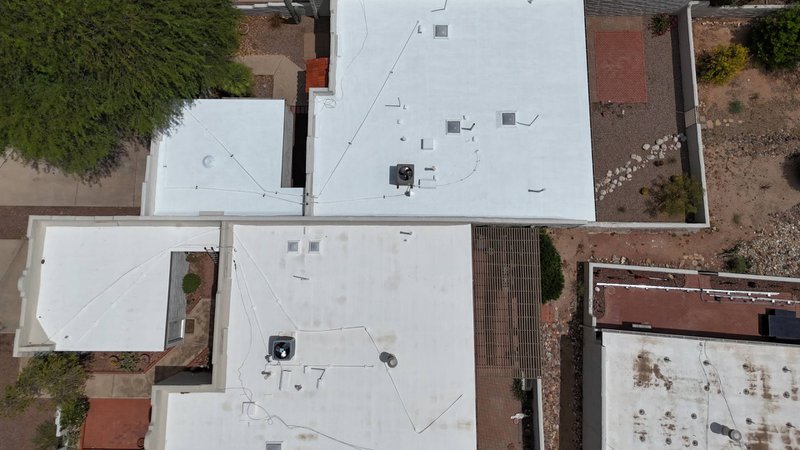
Reflective coatings are liquid-applied. Once cured they form a seamless, flexible membrane that reflects sunlight, shields the roof from UV and seals small gaps against monsoon rain. Different chemistries suit different roofs:
- Acrylic: Highly reflective and cost-effective, well suited to sloped and low-slope roofs in dry climates like ours.
- Elastomeric: Stretches and recovers as the roof expands in the afternoon heat and contracts overnight, which helps prevent cracking.
- Silicone: Strong waterproofing and UV resistance, and a good fit for flat roofs that hold water after storms. Learn more about how silicone roof coatings work.
- Polyester-embedded (reinforced): A polyester fabric set into the coating adds strength and flexibility for roofs with existing surface wear.
Not sure which one fits your roof? Our guide to the best type of roof coating for your home compares them in more detail.
How a Reflective Coating Is Applied
A durable cool roof depends on preparation. The roof is inspected first to confirm it is a good candidate. The surface is then cleaned so dirt, debris and loose material do not interfere with adhesion. Small cracks, damaged flashing and weak spots are repaired so the coating can form a continuous barrier. Finally the coating is rolled or sprayed on and left to cure into a flexible, reflective membrane.

Energy and Comfort Benefits in Tucson’s Heat
Lower cooling bills. Reducing heat absorption at the roof directly reduces how hard your AC has to work, especially through long stretches of triple-digit days. Your system cycles less often, and lower summer demand shows up on your utility bills over time. For more on the savings side, see how green roofing can reduce energy costs in Tucson homes.
More even indoor comfort. Many Tucson homes have rooms directly under the roof that stay hotter than the rest of the house. Cutting heat transfer from above helps balance temperatures from room to room, so you are not constantly adjusting the thermostat.
Less wear on your HVAC. A lighter cooling load means fewer run hours, which reduces wear on the equipment and can help it last longer.
A longer-lasting roof. Intense sun and big daily temperature swings make roofing materials expand and contract, which leads to cracking, warping and early breakdown. A cooler surface reduces that thermal stress and slows UV aging, so the roof needs fewer repairs.
Cooler neighborhoods. Dark roofs store heat and release it into the evening air, adding to the urban heat island effect. Reflective roofs absorb less heat to begin with, so they give off less warmth after sunset. As more homes adopt them, the combined effect helps cool neighborhoods, lowers peak demand on the local power grid and reduces the energy-related emissions that come with it.
What about winter? A cool roof reflects some winter sun too, but Tucson’s mild winters mean any small heating penalty is far outweighed by the summer cooling savings.
Which Roofs Can Become Cool Roofs
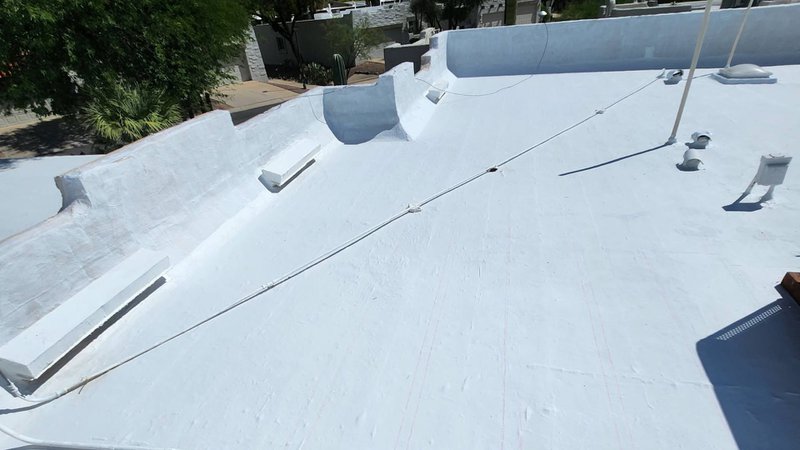
Flat and low-slope roofs, including the territorial-style roofs common across Tucson, are the easiest to convert. A reflective roof coating can be applied directly over a structurally sound roof, or GreenGo Roofing can install the Lifetime Layover System, which adds an energy-efficient, reinforced coating system over the existing surface without a tear-off.
Coatings work best when the existing roof is still structurally sound but showing wear: fading, minor cracks or early material breakdown. A roof with widespread moisture damage, soft decking or failing structure needs repairs or replacement first. Tile and shingle roofs can also be made cooler by choosing lighter, more reflective materials when they are replaced.
Cool Roof Costs and Lifespan
Cost depends on roof size, the current condition of the surface, how much repair is needed before coating, and which coating system you choose. Converting an existing flat roof with a coating or a layover is usually far less expensive than a full replacement because there is no tear-off or disposal, which also keeps old roofing out of the landfill.
How long a cool roof lasts depends on the product, how thick it is applied and how well the roof is maintained. Periodic inspections, especially before and after monsoon season, help keep the surface clean, reflective and sealed. Savings vary with insulation, roof size and how hard your AC works, so a GreenGo Roofing inspection is the best way to estimate the difference for your home.
Is a Cool Roof Right for Your Tucson Home?
A cool roof is a strong fit if you have a flat or low-slope roof, rooms that stay hot under the roof, high summer cooling bills or a roof that is wearing but still structurally sound. Because Tucson has long, hot summers and mild winters, reflective roofing pays off here more than in most places.
Cool Roof FAQs
Can my existing roof become a cool roof? Often, yes. Most flat and low-slope roofs can be converted with a reflective coating or the Lifetime Layover System, without a tear-off.
Are cool roofs better for the environment? Yes. Lower cooling demand reduces energy use, cooler roofs help reduce the urban heat island effect, and coating over an existing roof keeps material out of the landfill.
How much can a cool roof save? It depends on your insulation, roof size and cooling habits, but homeowners commonly notice lower summer cooling bills and a more comfortable top floor.
Ready to see what a cool roof could do for your home? Contact GreenGo Roofing for a free cool roof estimate, or call (520) 475-4000. We will inspect your roof, explain your options and give you a clear quote.
