
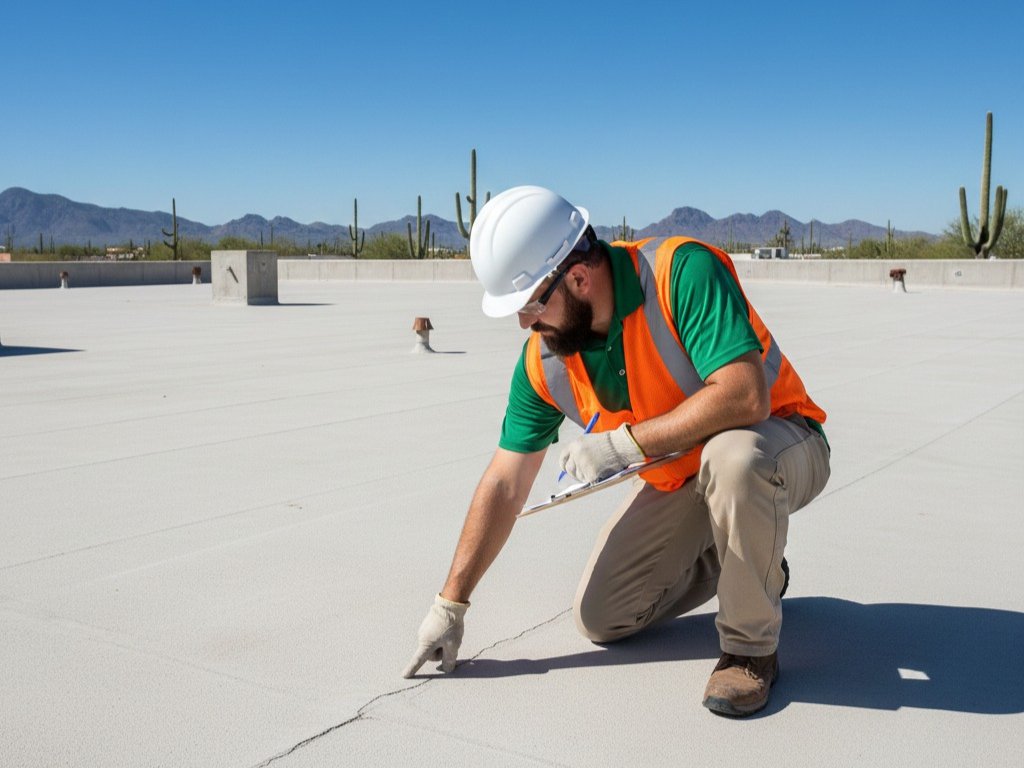
Tucson winters create shifting moisture conditions that add stress to building structures with large exposed surfaces, like commercial roofs. Property managers improve reliability by identifying early warning signs of weakness before storms increase seasonal strain.
Commercial buildings face higher winter risk because water accumulation accelerates surface deterioration when drainage systems fail or membranes weaken. Facilities stay protected when proactive preparation supports consistent long-term roof performance across cold and wet months.
How Water Damage Can Be Prevented In Tucson Residential and Commercial Roofs
Water damage prevention requires regular inspections that identify early weaknesses before storms intensify. Commercial and residential roofs stay safer when drainage systems move water efficiently during winter rainfall. Prompt repair work prevents leaks from spreading into vulnerable interior areas.
How Exterior Surface Evaluations Improve Winter Performance
Exterior evaluations provide essential visibility into early deterioration that forms across high-exposure roof sections. Property owners incorporate a roof evaluation into winter preparation to identify cracks, lifted edges, and weakened materials on commercial roofs. Accurate observation helps prevent expanding damage under cold seasonal weather.

Membrane punctures create direct moisture paths that worsen quickly once storms deliver continuous rainfall. Facilities avoid deeper problems by correcting small openings before winter conditions intensify. Targeted repairs reduce overall strain on vulnerable sections throughout colder months.
Perimeter edges often loosen after long hot seasons, which increases the likelihood of wind-related damage during winter storms. Buildings are better protected when edge materials remain fully secured along all roof boundaries. Routine checks help sustain long-term performance during fluctuating seasonal conditions.
Why Drainage System Maintenance Supports Water Protection
Drainage system reliability determines how effectively winter moisture exits the roof surface during storm activity. Building managers include drainage evaluations in every inspection of commercial roofs to verify that downspouts, scuppers, and gutters remain clear. Smooth water flow helps prevent pooling that accelerates structural wear.
- Standing water increases surface stress because trapped moisture continually weighs on vulnerable roof sections. Persistent ponding weakens membranes during winter storms when temperatures fluctuate rapidly.
- Blocked scuppers hold water in areas that were designed to drain efficiently during rainfall. Water frequently spreads toward seams when scuppers fail to release moisture quickly.
- Gutter debris disrupts normal drainage patterns as winter storms push additional material across roof edges. Overflowing gutters send water toward fascia and wall intersections that cannot handle prolonged runoff.
- Downspout blockages push water back across roof sections where membrane layers already show early deterioration. Clear downspouts protect building foundations by redirecting moisture far from sensitive exterior walls.
- Misaligned drainage components shift water into shallow depressions that develop across aging surfaces. Correct alignment restores predictable flow patterns that support winter storm performance.
Drainage systems function more consistently when cleaned after early seasonal storms that distribute heavy debris across rooftops. Facilities avoid preventable complications when water channels remain open throughout the winter cycle. Timely maintenance allows drainage components to operate properly under repeated rainfall.
Building slopes perform more effectively when low areas receive attention before storms begin. Facilities benefit from early correction of depressions that promote pooling during colder months. Slope maintenance supports long-term water control across large commercial structures.
How Membrane Protection Supports Seasonal Weather Challenges For Residential and Commercial Roofs
Membrane protection remains one of the most important defenses for buildings exposed to winter moisture. Property managers include membrane evaluations during routine assessments of residential and commercial roofs to identify blistering, splitting, or adhesive separation. Strong membrane conditions reduce water infiltration during active winter events.
Thermal expansion and contraction gradually weaken membrane layers, especially across flat roofs exposed to seasonal temperature swings. Facilities perform better when weakened sections are restored promptly before storms intensify. Proactive sealing limits moisture entry along stressed membrane points.
Membrane seams remain vulnerable as adhesives deteriorate with sun exposure, leading into winter. Moisture penetrates quickly when gaps widen under cold temperatures. Reinforcing seam lines improves long-term membrane stability during rain-heavy periods.
Why Flashing and Penetration Checks Reduce Leak Potential For Residential and Commercial Roofs
Flashing protects major transition points where different materials meet across commercial roofs. Building managers include flashing checks during every winter preparation cycle because small movements often create leak risks. Secure flashing prevents water entry around vents, curbs, skylights, and mechanical equipment.
Corrosion develops naturally across metal flashing that experiences repeated moisture throughout the year. Facilities reduce long-term problems by replacing weakened metal before winter storms arrive. Corrosion signals the need for immediate correction to maintain protective barriers.
- Cracked flashing edges expose vulnerable areas where moisture easily enters during heavy winter storms. Updated sealant restores a proper barrier that prevents expanding leaks across transition points.
- Loose fasteners allow flashing movement that shifts materials during wind or rainfall events. Reinforcing attachment points improves stability across areas that frequently experience seasonal pressure changes.
- Rusted sections weaken metal around transitions as corrosion expands across exposed surfaces. Replacement materials restore long-term function and reduce the risk of water exposure throughout winter.
- Poor installation directs water beneath flashing layers where moisture accumulates undetected. Correct placement ensures runoff follows intended pathways during severe weather.
- Debris buildup prevents water from flowing away from sensitive flashing areas during rainfall. Removing debris stabilizes drainage and reduces moisture collection during storms.
How Winter Preparation Protects Flat Roofing Systems
Flat roofing systems require close attention because surface water remains on the surface longer than non-low sloped roof designs. Property owners perform slope evaluations during winter preparation to ensure commercial roofs drain properly across all areas. Winter readiness depends heavily on stable slope performance during frequent rainfall.

Low spots form gradually when insulation compresses or structural movement alters surface elevation. Facilities correct depressions early to prevent winter pooling, which can cause membrane stress and potential moisture intrusion. Addressing low areas in advance promotes stable, consistent performance throughout the winter season. Early correction of low areas ensures consistent moisture control during colder months.
Protective coating systems improve seasonal resilience by creating additional layers that better manage moisture. Buildings perform better when coatings reinforce surfaces before storms begin. High-quality coating applications help maintain durability throughout changing temperatures.
How Tucson Property Managers Benefit From Professional Support
Professional assistance identifies deeper issues that DIY evaluations frequently overlook. Buildings benefit from expert assessments when commercial roofs display signs of wear that extend beyond visible indicators. Comprehensive evaluations provide accurate insight before winter storms apply greater stress.
Timely repairs improve reliability across roofs exposed to monsoon heat before winter moisture arrives. Facilities depend on professionals for membrane repair, flashing restoration, and slope adjustment during colder months. Skilled support helps maintain consistent roofing performance during fluctuating seasonal conditions.
Professional teams provide roof restoration, replacement, installation, and coating services that support long-term protection for Tucson buildings. Facilities remain safer when roofing solutions align with climate-specific demands across winter seasons. Expert workmanship reinforces resilience during extended moisture exposure.
Strengthen Your Roof Against Winter Moisture
Tucson property owners reduce water-related risks by completing thorough evaluations before winter conditions intensify. Exterior inspections, drainage checks, membrane reviews, and flashing assessments build a strong foundation for seasonal protection. Facilities remain safer when early repairs address developing concerns before storms arrive.
Buildings maintain long-term stability when professional teams perform targeted improvements discovered during winter preparation. Durable materials and reliable workmanship increase overall resilience across commercial roofing structures. Contact GreenGo Roofing today to schedule a full winter-readiness evaluation for your commercial property.