

Choosing durable roofing materials in Tucson is not just about appearance. Extreme heat, intense UV, big day-to-night temperature swings and monsoon storms constantly test your roof, and a material that lasts decades in a mild climate can wear out much sooner here. Many homeowners focus on upfront price, but long-term value depends on how well a material handles local conditions. This guide compares the main options for Tucson homes so you can choose a roof that actually lasts.
What ‘Durable’ Means in Tucson’s Climate
In Southern Arizona, a durable roof is one that holds up to five specific stresses:
- Heat resistance: the material must handle long stretches of extreme temperatures without cracking, warping or losing strength.
- UV stability: constant ultraviolet exposure breaks down many materials and fades color, so the surface needs to resist sun damage.
- Thermal expansion control: materials expand in the afternoon heat and contract at night. Systems designed for that movement are less likely to crack or separate at joints.
- Moisture resistance: monsoon storms (June 15 to September 15) and winter rains bring heavy, sudden water and wind. The roof has to shed water and resist pooling and wind-driven rain.
- Installation compatibility: a material only performs if it suits your roof’s slope, structure and design and is installed correctly.
Installation quality matters as much as the material. Even premium products fail early with poor flashing, inadequate underlayment or bad ventilation, which is why professional new roof installation is part of any durability decision.
Tile Roofs: Clay vs Concrete
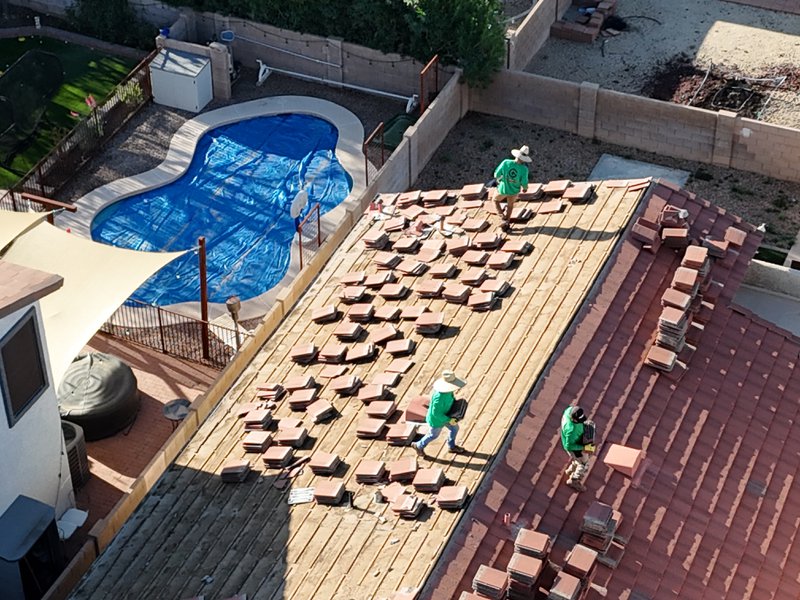
Tile roofing performs exceptionally well in hot climates. Clay and concrete tiles resist heat and UV, suit the Southwestern architecture common across Tucson, and individual broken tiles can be replaced without removing the whole roof.
- Clay tile: fired clay holds its color and shape under intense sun and is generally the longest-lasting tile option. It is heavier and usually more expensive than concrete, and individual tiles can crack under foot traffic or impact.
- Concrete tile: more affordable than clay and very durable, though it can fade and absorb more moisture over time. It is also heavy, so the roof structure must be rated for it.
The tiles themselves are rarely what fails first. The underlayment beneath them takes years of heat and eventually wears out, which is the most common reason a tile roof leaks. Many tile roof projects involve lifting the tiles, replacing the underlayment and reinstalling sound tiles. For a deeper look, see the pros, cons and costs of tile roofs in Tucson.
Asphalt Shingles
Asphalt shingles are a cost-effective option with simple installation and wide availability. They come in many colors and styles, and damaged shingles can often be replaced individually. Modern shingles with heat-resistant and reflective granules hold up better than older products.
The trade-off is lifespan. Prolonged heat and UV dry out shingles faster in Tucson than in milder climates, so they typically do not last as long as tile. Good attic ventilation is essential, because trapped heat cooks shingles from below. If you are weighing these two popular options, our comparison of asphalt shingle vs tile roofs for Tucson homes goes into more detail.
Metal roofing is a less common choice on Tucson homes, but it is also worth considering. It is lightweight, sheds water quickly and reflects heat well, especially with a light-colored finish. It costs more upfront than shingles, and fasteners and seams need periodic checks as the panels expand and contract.
Flat Roof Systems and Coatings
Flat and low-slope roofs are common on territorial and modern homes in Tucson. Reflective systems such as foam or TPO reduce heat absorption, improve energy efficiency and allow easy access to rooftop HVAC equipment. Drainage is critical, because ponding water after monsoon storms is the main enemy of a flat roof. To learn how the layers work together, read understanding the anatomy of your flat roof.
On a flat roof, much of the durability comes from the coating on top:
- Silicone coatings handle UV and ponding water exceptionally well and are a top choice for flat roofs.
- Acrylic coatings are highly reflective and cost-effective on roofs with good drainage.
- Elastomeric coatings stretch and recover with daily temperature swings, sealing small cracks.
- Polyester-embedded coatings add a reinforcing fabric layer for extra strength on aging surfaces.
When a flat roof is worn but structurally sound, it often does not need a full flat roof replacement. GreenGo’s Lifetime Layover System installs a durable, energy-efficient coating system directly over the existing roof, skipping the tear-off and keeping old material out of the landfill.
Comparison Table: Lifespan, Cost, Heat Performance
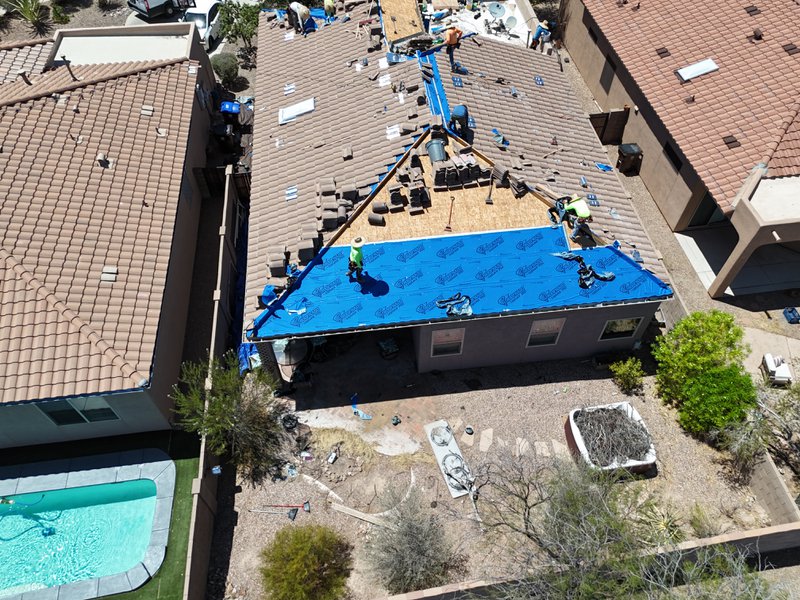
The lifespans below are general industry ranges, not guarantees. Actual life in Tucson depends on product quality, installation, ventilation, drainage and maintenance.
| Material | Typical lifespan (general range) | Relative upfront cost | Heat and UV performance |
|---|---|---|---|
| Clay tile | 50+ years for the tile; underlayment needs replacing sooner | High | Excellent |
| Concrete tile | 30 to 50 years for the tile; underlayment needs replacing sooner | Moderate to high | Very good |
| Asphalt shingles | Roughly 15 to 25 years, often shorter in intense sun | Low to moderate | Fair; improved with reflective granules and good ventilation |
| Metal | 40+ years | Moderate to high | Very good, especially with reflective finishes |
| Coated flat roof (foam, TPO or coating system) | Varies by system; coatings can be renewed by recoating | Low to moderate | Excellent when the reflective coating is maintained |
Whatever you choose, regular inspections, prompt repairs and clear drains add years to any roof. If your current roof is near the end of its life, our roof replacement services in Tucson cover every material in this guide.
Not sure which material fits your home and budget? Contact GreenGo Roofing or call (520) 475-4000 for a free roofing estimate.
