
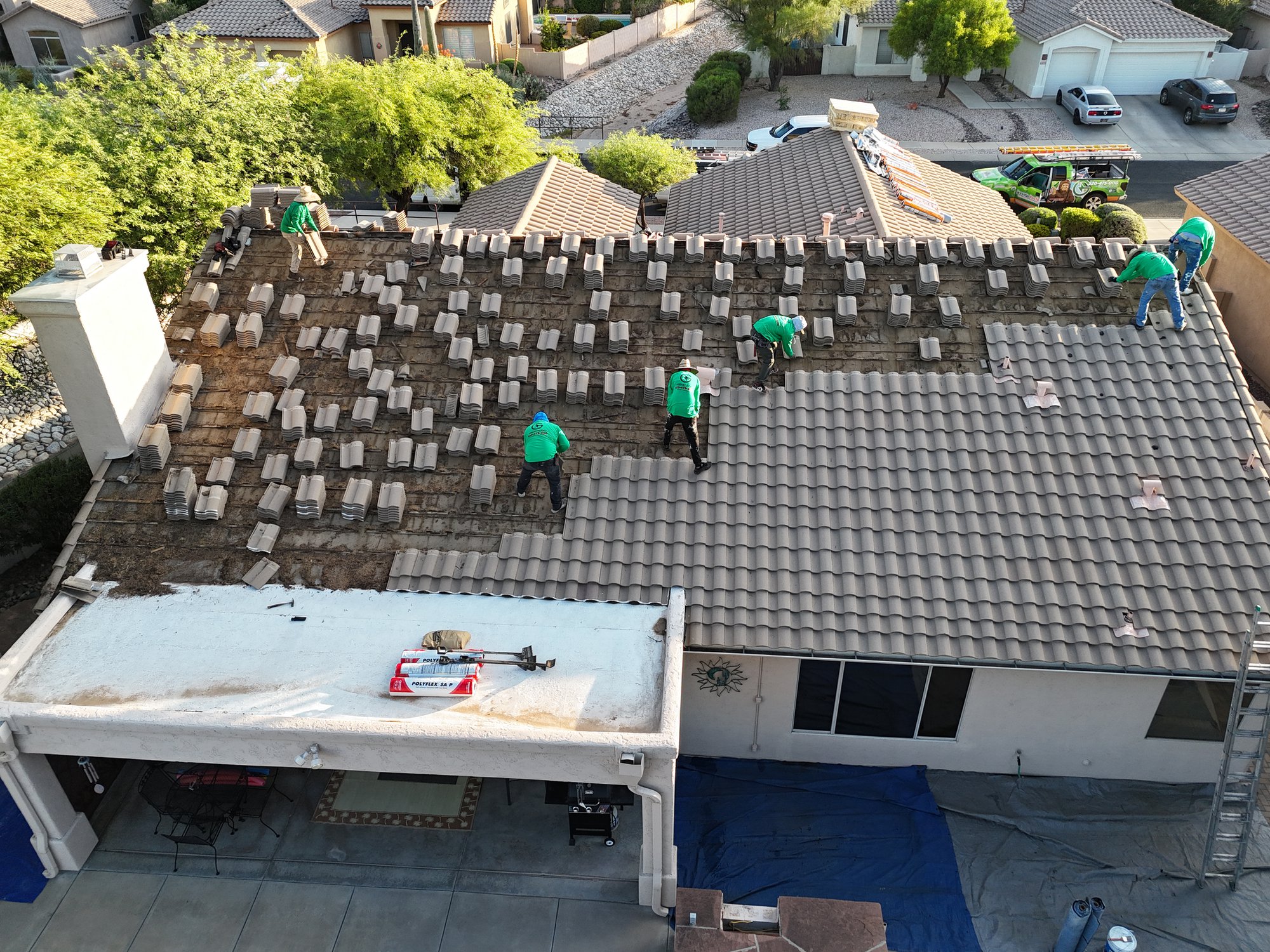
A new roof is one of the biggest investments you will make in your home. Understanding what drives roof replacement cost in Tucson helps you make a smarter decision before you commit to a contractor, and knowing every cost factor up front keeps your budget from getting derailed mid-project.
Most homeowners focus on materials and miss the bigger picture. Labor, tear-off and disposal, decking, underlayment and permits all push the final number higher than expected. Getting clear on every cost category puts you in a stronger position from the start.
How Much Does Roof Replacement Cost in Tucson?
As a general range, residential roof replacement in Tucson typically runs from about $7,000 to $25,000, depending on the size of the home, the material and the condition of what is underneath. Tile roofs sit at the higher end, while asphalt shingle and flat roof systems usually cost less. Every home is different, so a professional on-site assessment is the only reliable way to get an accurate number for yours. For more common questions, see our roof replacement FAQ for Tucson homeowners.
What Factors Affect the Cost of Roof Replacement in Tucson
Several factors determine what you will actually pay for roof replacement in Tucson. Contractors price each project on a combination of variables, and knowing them before you request estimates puts you in a better position to evaluate the quotes you receive.
1. Roof Size and Complexity
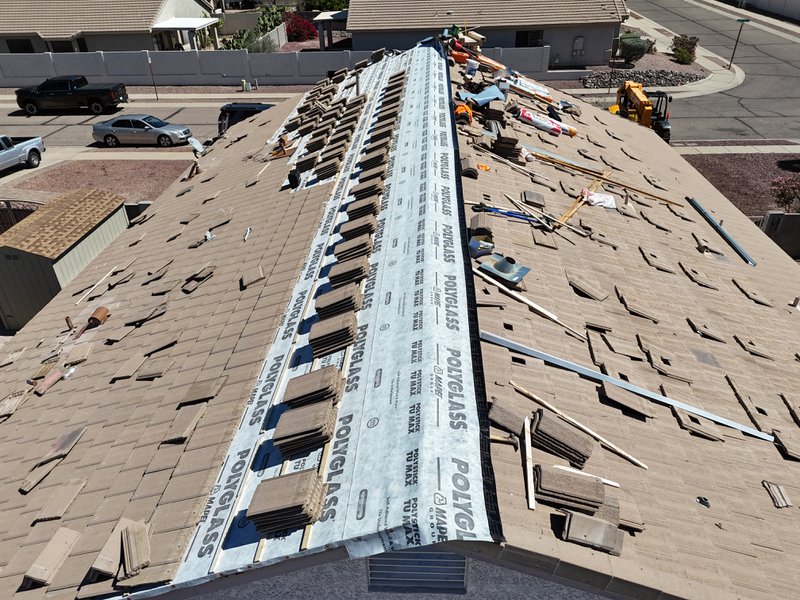
Larger roofs need more material and more labor hours. Complex designs with multiple slopes, valleys, hips and penetrations take longer to install and cost more. A straightforward flat roof replacement will usually cost less per square foot than a complicated pitched tile roof.
2. Material Choice
The material you choose has the biggest single impact on your total cost. Tile carries a higher price than asphalt shingles or flat roof systems. Balancing upfront cost against long-term durability in Tucson’s heat and UV is one of the most important decisions you will make.
3. Tear-Off and Disposal
Removing your existing roof adds labor time, and hauling the old material to the landfill adds disposal fees that many homeowners do not plan for. On flat roofs, choosing a layover instead of a full tear-off can eliminate this expense entirely.
4. Underlayment and Decking Repairs
Replacing damaged decking or upgrading underlayment adds to the total but protects your investment. Monsoon leaks and winter rain that get past an aging roof accelerate wood rot under the surface. Skipping necessary decking repairs to save money up front almost always leads to bigger problems later.
5. Labor and Contractor Experience
Labor rates vary between contractors, and experience plays a big role. A qualified crew may cost more, but installation quality directly affects how long your roof lasts. The cheapest labor is rarely the best value over the life of the roof.
How Roofing Materials Impact Your Replacement Budget
Each material has its own price point, lifespan and performance profile, which affects both upfront cost and long-term value.
Asphalt shingle roof replacement is usually the most affordable option up front. Shingles install quickly and perform well when you choose a high-grade product rated for heat and UV exposure. They do have a shorter lifespan than tile, so factor in how often you will need to replace them.
Tile roof replacement costs more up front, but clay and concrete tile can last 50 years or more with proper maintenance, and it handles Tucson’s sun better than most materials. On many tile roofs the underlayment wears out long before the tiles, so the job may involve replacing the underlayment and resetting existing tile. Flat roof systems fall in the middle, with costs that vary by system type, coating and square footage.
Spreading a higher initial investment over a longer lifespan often makes the premium material the more economical choice.
When a Roof Layover Is a Smarter Choice Than Replacement
Full replacement is not always the right call. If you have a flat or low-slope roof, a roof layover can save significant money when your roof qualifies. A professional assessment tells you whether your existing structure can support a layover instead of a complete tear-off.
A layover makes the most sense when the roof’s structure is still sound but the surface has taken a beating from sun and storms. GreenGo Roofing’s Lifetime Layover System adds multiple reinforcing layers directly over the existing roof, creating a watertight, reflective barrier without the cost of starting over. When the structure is sound, you get new-roof performance at a fraction of the price of a replacement.
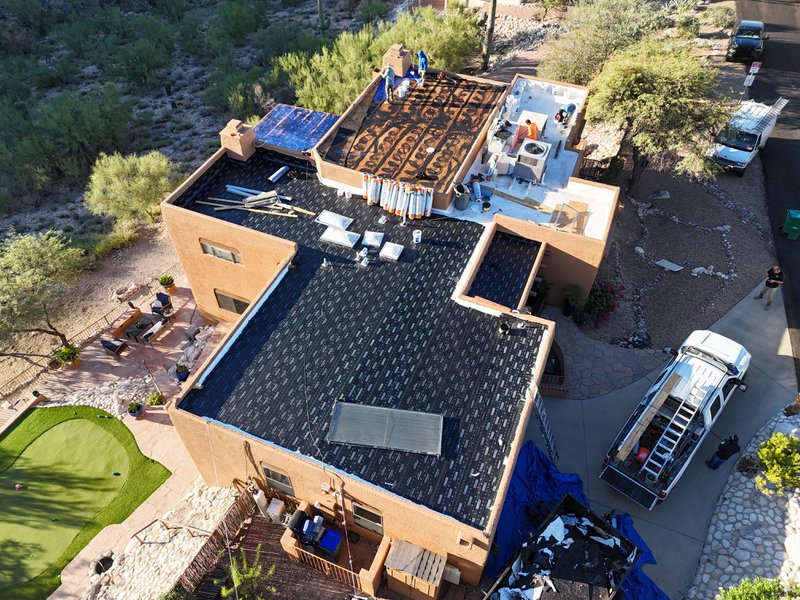
Because nothing is torn off, a layover also eliminates tear-off and disposal costs and keeps old roofing out of the landfill. The reflective surface can lower cooling costs, too.
A layover only works when the underlying structure is in good condition and free of serious moisture damage. An honest evaluation from a qualified contractor is the only way to know which path is right for your home.
How to Get the Most Value From Your Roof Replacement in Tucson
Real value comes from informed decisions at every stage. Rushing into a contract without understanding your options almost always costs more in the long run.
- Get Multiple Estimates: Collecting at least three quotes from qualified Tucson contractors gives you a realistic picture of fair pricing and helps you spot red flags, such as unusually low bids.
- Prioritize Material Quality: A higher-grade material extends the time between replacements and reduces maintenance costs. In Tucson’s climate, material quality directly determines how well your roof holds up.
- Ask About a Layover First: Before committing to a full replacement of a flat roof, ask whether a layover makes sense. It can deliver similar performance at a much lower cost when the structure is solid.
- Factor in Energy Savings: Reflective coatings and energy-efficient materials reduce cooling costs through Tucson’s long summers. Include those savings when you evaluate the total value of each option.
- Verify Licensing and Insurance: Work with a licensed, insured contractor. In Arizona, checking a contractor’s license with the Registrar of Contractors (ROC) takes minutes and gives you confidence before you sign.
- Check Your Insurance Coverage: If storm damage is involved, your homeowner’s policy may cover part of the cost. Learn how to get insurance to pay for roof replacement.
How to Budget and Finance a New Roof
Start your budget with a written estimate that breaks out materials, labor, tear-off, decking allowances and permits, then add a cushion for decking or underlayment repairs that may only be found once the old roof is opened up. Planning the work outside monsoon season (June 15 to September 15) also gives you more scheduling flexibility. Our guide to the roof replacement timeline and process in Tucson explains what happens at each stage.
If paying all at once is not practical, roof replacement financing lets you spread the cost into manageable payments so you do not have to put off a roof that needs attention now.
Plan Your Roof Replacement in Tucson With Confidence
Understanding your costs before you commit puts you in a position to make the right call for your home and your budget. GreenGo Roofing gives Tucson homeowners straight answers and honest assessments from the first conversation, and every replacement project starts with a free estimate, so you know exactly what you are working with before anything is signed.
Get a replacement quote from GreenGo Roofing or call (520) 475-4000 to schedule your free estimate.
